

China as a Low-Cost Supply Hub: China has earned its reputation as the “world’s factory,” offering massive product variety at highly competitive prices. Thanks to China’s enormous manufacturing capacity and low labor costs, many goods – from electronics to textiles – can be produced more cheaply there than elsewhereblog.checkitprocure.com. It’s no surprise that China is Nigeria’s largest import partner, supplying roughly one-quarter of all Nigerian importsstatista.com. For Nigerian retailers and wholesalers, buying directly from Chinese manufacturers often means lower unit costs compared to sourcing locally or from Europe/U.S. – even after factoring in shipping and import fees.
Map illustrating the trade route from China to Nigeria, a major supply line for Nigerian importers. Chinese goods (left) feed directly into Nigeria’s market (right), reflecting how China now accounts for ~25–28% of Nigeria’s importsstatista.com.
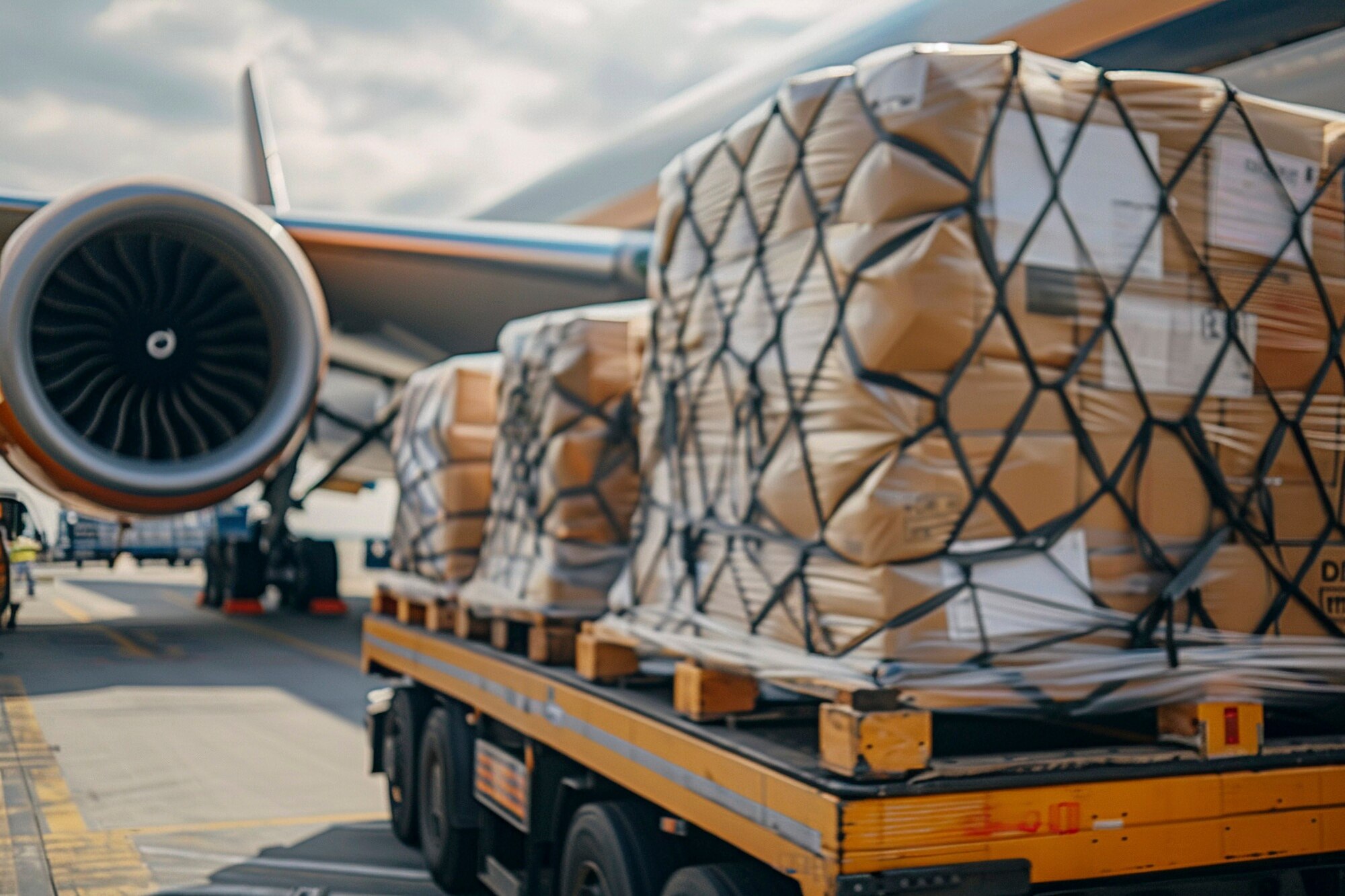
Shipping Costs and Times: Transportation is a critical part of the cost equation. Importing from China requires either sea or air freight, each with its own costs and timelines:
- Sea Freight: The cheapest option for bulk goods, with a typical transit of ~6–8 weeks by oceanbowagateglobal.com. As of late 2024, shipping a full container (40-foot) from China to Nigeria costs around $5,500 and takes about 50–55 days port-to-portpresou.com. (A 20-foot container is a bit cheaper, ~$4,600). Ocean freight is ideal for high-volume shipments where time is less critical.
- Air Freight: Much faster but costlier. Standard air cargo can arrive in 5–10 daysbowagateglobal.com, useful for electronics or fashion items needed quickly. However, air transport can cost $10–$20 per kilogram for regular postal air or $30–$50/kg by express courierpresou.com – prices that add up for heavy goods. Even commercial air freight (e.g. consolidating goods by cargo plane) runs about $13,680 per ton (~$13.7/kg)presou.com. Businesses must weigh speed vs. cost: faster delivery ensures stock availability but eats into profit margins if the goods are heavy or low-value.
Import Duties and Taxes: Bringing goods into Nigeria incurs customs charges that must be added to the total landed cost. Nigeria calculates duties based on the CIF (Cost, Insurance, and Freight) value of the shipmentbowagateglobal.com. Key import costs include:
- Customs Duty: Typically 5% to 35% of the CIF value, depending on the product category (higher for luxury goods, lower for essential or industrial items)bowagateglobal.com. For example, textile fabrics might incur around 10–20% duty, electronics around 5–20%, while certain luxury or protected items face the upper band of 35%.
- Value Added Tax (VAT): A flat 7.5% VAT is applied on top of the sum of CIF + dutybowagateglobal.com. So if you import ₦1,000,000 worth of goods (including shipping) and owe a 20% duty (~₦200k), you’ll then pay 7.5% of ₦1.2 million as VAT.
- Other Levies: Depending on the goods, there may be additional fees – e.g. a 1% CISS (inspection) fee, ETLS levy for imports from ECOWAS neighbors, or excise duties on specific products like alcoholbowagateglobal.com. Though these are smaller percentages, they add to costs and must be planned for.
Comparing to Local Sourcing: Even with freight and duties, Chinese imports often still come out cheaper than local alternatives for many products. For instance, Chinese manufacturers produce electronics or apparel at economies of scale Nigerian producers can’t match – a made-in-China smartphone with advanced features might sell at a fraction of the price of a brand-name modelarchive.businessday.ng. This allows Nigerian traders to offer budget-friendly options (e.g. unbranded dual-SIM phones or generic fashion items) to price-sensitive consumers. However, it’s not universally cheaper in every caseblog.checkitprocure.com. Heavy or low-margin goods can become expensive once shipping is added – a bulky piece of furniture or machinery might end up costing more to import than to buy locally due to freight weight and volume costsblog.checkitprocure.com. Also, some products are available at competitive prices from closer markets (like used clothing from Europe or rice from nearby countries) with lower transport costsblog.checkitprocure.com. Smart importers will calculate the total landed cost – combining product price, shipping, insurance, duties, and VAT – to ensure China sourcing truly saves moneyblog.checkitprocure.com. Tools like landed cost calculators or procurement platforms help with this, preventing surprises at the port.
Hidden Costs and Considerations: A thorough cost-benefit analysis also looks at less obvious factors:
- Quality Control: Lower prices shouldn’t come at the expense of unusable goods. Without due diligence, an importer might receive substandard or fake products, incurring losses. Many Nigerian importers now invest in pre-shipment inspections – hiring third-party agents in China to verify product quality and specs before the goods leave portblog.checkitprocure.com. This adds a fee (but far less than the cost of a ruined batch of goods). Building a relationship with reliable suppliers is key so that quality remains consistent.
- Minimum Order Quantities (MOQ): Chinese wholesalers often require buying in bulk. A small startup might find the MOQ (say 500 units of an item) is more than they need, tying up capitalblog.checkitprocure.com. On the flip side, ordering larger volumes usually brings the per-unit price down. Businesses must balance purchasing enough to get good pricing, against the risk of overstocking inventory.
- Exchange Rate Fluctuations: Since payments to Chinese suppliers are typically in U.S. dollars or Chinese yuan, Nigerian importers face exchange rate risk. If the naira suddenly devalues in the middle of a transaction, the local cost of that $10,000 order could jump significantlyblog.checkitprocure.com. It’s wise to keep an eye on forex trends or even pay in advance when rates are favorable. (We’ll discuss later how some initiatives like a yuan-naira swap aim to ease this pressure.)
- Local Alternatives: While China is a go-to for cost, businesses should also scan local or regional sources where available. Buying locally can save on freight and is faster – no waiting weeks for delivery. For example, some packaging materials or simple machinery might be available from local manufacturers or from Turkey/India at similar cost. If a local supplier can meet your quality and price needs, it might offer advantages like easier communication, quicker restocks, and support for the domestic economyblog.checkitprocure.com. The bottom line is to compare options: China often wins on price and variety, but the smart importer crunches the numbers every time to confirm the best deal.
Takeaway: Sourcing from China can dramatically lower procurement costs for Nigerian businesses in sectors like fashion, electronics, and household goods. By leveraging China’s low production costs and variety, importers often achieve 20%–50% (or more) savings versus buying locally – enabling higher profit margins or more competitive retail pricing. But success lies in managing the full supply chain costs: finding trustworthy suppliers, choosing the right shipping mode, calculating duties, and ensuring quality. When done right, the cost benefits of “Made in China” goods can far outweigh the added logistics, making it a cornerstone strategy for Nigerian retailers and wholesalers looking to thrive in a price-sensitive marketnaiyuanmart.com.
Leave a Reply